What Are These Animal Babies Called How Well-developed Are There Dingoes at Birth
Dingoes
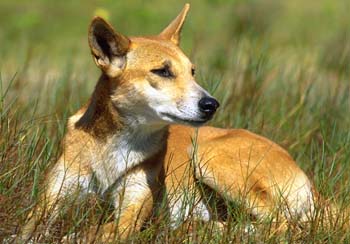
Canis lupus dingo
The dingo—Australia's just native canid—is descended from s Asian wolves. This ancestry is reflected in their scientific name, Canis lupus dingo (lupus meaning 'wolf').
Heart-catching, curious and sometimes dangerous, the dingo can be observed beyond Commonwealth of australia where they play an important role in the natural environment.
The dingo has a part as an noon predator and is also believed to play a role in keeping natural systems in residue. In addition, dingoes also casualty on some feral animals, and in this way can aid the survival of native species.
Dingoes hold a significant place in the spiritual and cultural practices of some Aboriginal and Torres Strait Islander communities. As an iconic Australian species, the chance to discover a dingo in its natural habitat is besides considered an exciting opportunity and privilege. This wildlife feel attracts tourists, resulting in flow-on economic benefits. Naturally curious, the dingo volition occasionally approach humans only should be treated with absolute caution. Despite looking like a domestic canis familiaris, the dingo is a wild animate being and can be dangerous.
What do they look like?
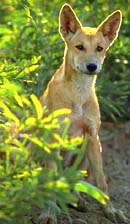
The dingo can stand up more than 60cm high and weigh between thirteen–18kg, depending on its geographic location. Dingoes are naturally lean, with large ears permanently pricked and tails marked with a white tip.
Although mainly sandy-yellow in colour, some dingoes may also be black and tan. The colour of a dingo is determined by where it lives. Golden yellowish dingoes are found in sandy areas while darker black and tan dingoes are establish in forests.
Dingoes are pack animals. Wild dingoes may sometimes appear in poor condition due to naturally occurring wellness issues or because they have been denied food by more than ascendant members of their pack. Subordinate and scapegoat pack dingoes are the lowest ranking dingo pack members and receive few privileges, including more than limited admission to nutrient even when it is available. The variable condition of individual dingoes is consistent with populations of other wildlife species and is not an indication of the overall health of the population.
Where practise they live?
From harsh deserts to lush rainforests, the highly adaptable dingo is found in every habitat and country of Australia except Tasmania. Dingoes favour edges of forests next to grasslands. In deserts, admission to drinking water determines where the brute can live.
Fraser Island dingoes inside the Corking Sandy National Park have peculiarly significant conservation value and iconic status because they accept rarely interbred with domestic or feral dogs. See more than information most the dingoes on Fraser Island.
What do they eat?
Dingoes are Australia'south largest meat-eater (carnivore) and hunt many kinds of animals. They hunt mainly at night. Depending on the size of the prey, dingoes may hunt alone or in packs.
The dingo is a generalist predator and will search widely for food and eat whatever it finds.
Dingoes by and large swallow small native mammals, introduced feral animals and some domestic animals. Discarded food from campers and fishers are as well eaten when the opportunity arises.
Are dingoes considered native to Australia?
The earliest undisputed archaeological finding of the dingo in Commonwealth of australia has been dated to 3,500 years ago when it was likely introduced by Asian seafarers. Nevertheless, the Queensland Museum notes that recent DNA studies suggest dingoes may have been in Australia fifty-fifty longer (betwixt 4,640 and 18,100 years).
While dingoes Canis lupus dingo expect similar to some domestic dogs Canis lupus familiaris, they are really a different subspecies of wolf. According to the Queensland Museum, the origins of dingoes can be traced dorsum to a southward Asian variety of greyness wolf Canis lupus lupus.
How exercise they breed?
Dingoes alive for about 10 years in the wild and tin get-go convenance in one case they attain the age of one or 2.
Different the domestic domestic dog, the dingo breeds only once a year. Litters of around 4 to vi dingo pups are born in areas such as a hollow log or under a rock ledge.
Are dingoes protected?
The dingo is considered native wildlife under the Nature Conservation Act 1992, and are protected on national parks. On Fraser Island (Cracking Sandy National Park) dingoes are managed in accordance with the Fraser Island Dingo Conservation and Chance Management Strategy . Elsewhere in Queensland dingoes are declared equally a pest species nether the Land Protection (Pest and Stock Route Management) Human activity 2002.
Dingoes are wild animals and, where protected, should be interfered with as lilliputian every bit possible. Under the Nature Conservation (Protected Areas Management) Regulation 2006, Nature Conservation (Wildlife Direction) Regulation 2006 and the Recreation Areas Direction Human action 2006, it is an offence to feed or disturb dingoes. Serious penalties can upshot for non-compliance with legislation.
What are a dingo's threats to survival?
Dingoes can interbreed with domestic dogs. Unfortunately, interbreeding threatens the power of the dingo to survive as a divide subspecies. Along the more populated mainland littoral areas and in certain inland areas, interbreeding has go a serious problem and has weakened the distinct nature of this native animal. For the dingo to survive as a separate subspecies, information technology is of import to control the number of feral dogs. Dingoes on Fraser Island rarely interbreed with domestic or feral dogs due to their isolated location, making the conservation of these animals particularly important.
Feeding of dingoes can also threaten their survival as they learn to acquaintance humans with nutrient through handouts or poorly disposed rubbish scraps. As a result, dingoes may lose their natural fear of humans. In some situations, defending or fighting for this nutrient may pb to dangerous behaviour being exhibited by the dingo towards people. Dingoes that exhibit dangerous behaviour are required to be humanely euthanised as they have the potential to seriously injure or kill people.
Are dingoes unsafe?
While dingoes accept the potential to exist dangerous to humans, in reality the incidence of attacks on humans is relatively rare. The take chances of dangerous behaviour is greatly increased in dingoes that have become habituated to humans through feeding or other encouragement.
Be dingo-rubber:
- continue children close and stay in a group
- avoid feeding dingoes
- keep your campsite site make clean
- secure your food, allurement and rubbish
- never approach a dingo
- never encourage whatsoever interaction with a dingo
- know what to do if a dingo approaches.
The department's website provides information on how to respond in the rare event of being threatened or attacked by a dingo.
On national parks, any negative dingo encounters—circumvoluted, lunging, or being chased or bailed up past 1 or more dingoes, fierce tents or stealing holding, nipping, bitter or worse—should be reported to an QPWS ranger or by phoning thirteen QGOV (xiii 74 68) every bit presently equally possible. Mobile telephone charges may apply.
For all emergencies, phone Triple Zero (000) or try 112 from a mobile telephone if yous have no reception.
For all not-urgent medical assistance, call 13 12 33.
castillowhore1980.blogspot.com
Source: https://environment.des.qld.gov.au/wildlife/animals/living-with/dingoes
0 Response to "What Are These Animal Babies Called How Well-developed Are There Dingoes at Birth"
Postar um comentário